Bed bugs (Cimex lectularius) have been making a spectacular comeback in France for several years. These nocturnal parasites spread easily through travel, public transport and purchases of second-hand furniture. Knowing how to quickly recognise the signs of their presence is the key to limiting the infestation and speeding up their elimination. Here is a detailed guide to detecting, reacting to and effectively treating this scourge.
A careful inspection of your bed is the first step in the assessment. Start by removing the sheets and examining the mattress on all sides, paying particular attention to the seams, folds, handles and labels. Bed bugs leave their droppings there in the form of small black dots, similar to felt-tip pen marks, which stain the fabric. These marks consist of digested blood and do not come off with a simple wipe. Also look for small reddish or brownish stains on the sheets: these are bed bugs crushed while you sleep or droplets of blood from their bites. Bed bug eggs are whitish, the size of a pinhead (about 1 millimetre), and are often laid in clusters in the corners of the mattress and bed base. Shed skins, that is, the translucent exoskeletons left behind by bed bugs as they grow, are another reliable clue. Then inspect the bed base, especially the slats, screws and frame joints, followed by the headboard and the wall behind it.
Bed bug bites have distinctive features that set them apart from mosquito or flea bites. They usually appear in lines or clusters of three to five spots on areas of skin exposed during sleep: arms, shoulders, back, neck and legs. The spots are red, slightly swollen and cause intense itching that can last several days. Be aware, however: around 30% of people do not react to bed bug bites, which means you can be infested without showing any skin symptoms. That is why you should never rely solely on the absence of bites to rule out an infestation. A sweetish, unpleasant smell, often compared to that of crushed coriander, may also be noticeable in heavily infested bedrooms. This smell comes from the pheromones released by the bed bugs.
If you suspect an infestation, certain steps must be taken without delay to limit the spread. First, do not move your mattress or furniture into another room, as you could spread the bed bugs throughout the home. Immediately wash all your bed linen, clothes and textiles at a minimum of 60 degrees for at least 30 minutes. Tumble drying at a high temperature for a further 30 minutes is also very effective at killing bed bugs and their eggs. Meticulously vacuum the mattress, bed base, headboard, skirting boards and every corner of the bedroom. Immediately empty the vacuum cleaner bag into a tightly sealed bin bag and throw it away outside. Fit certified bed bug encasements on your mattress and bed base to trap the remaining bed bugs and stop new ones from getting in. These covers must be kept on for at least 18 months, the maximum time a bed bug can survive without feeding.
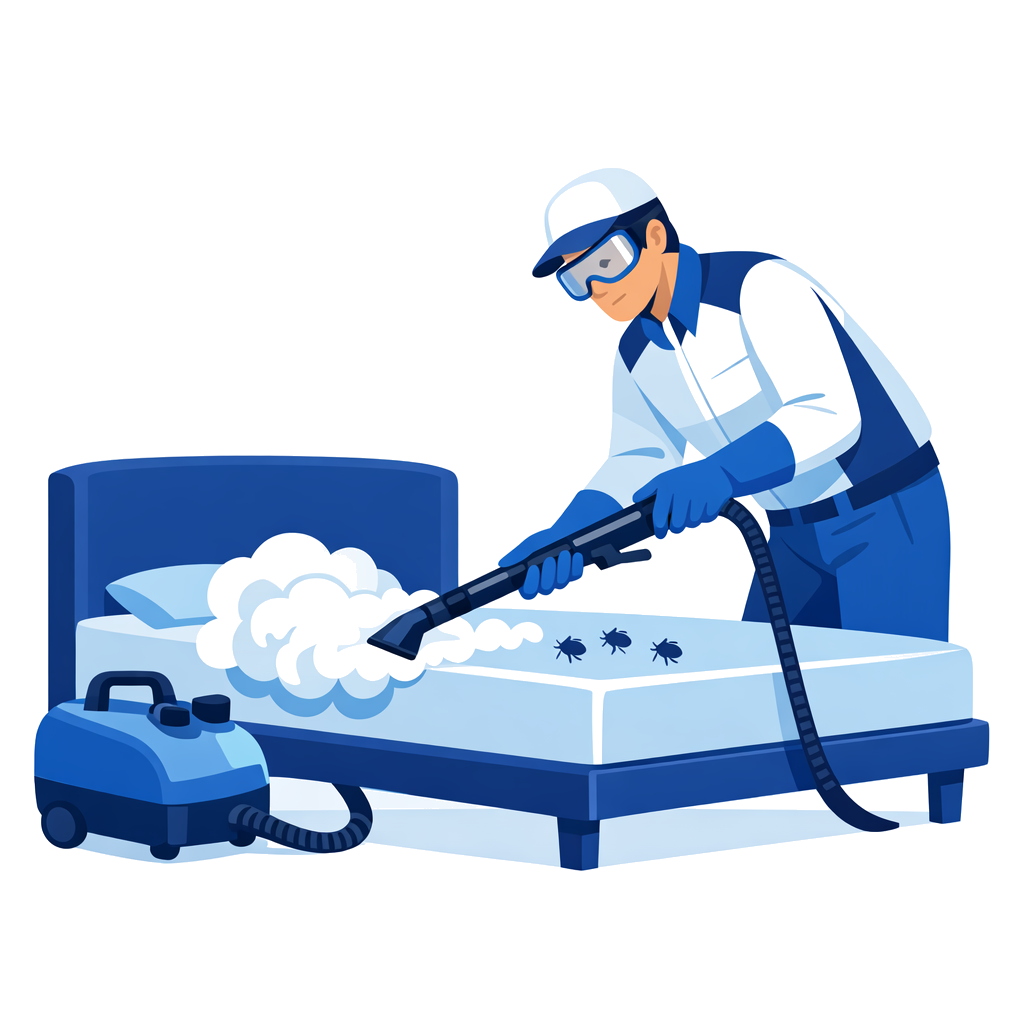
Professional bed bug treatment relies on several complementary techniques, chosen according to the level of infestation. Residual chemical treatment is the most common method: a Certibiocide-certified technician applies a contact and ingestion insecticide to all contaminated surfaces. This product remains active for several weeks, eliminating bed bugs that come into contact with the treated surfaces, including those that hatch after the initial visit. Two to three visits spaced 10 to 15 days apart are generally needed to completely eradicate the infestation. Dry steam at 180 degrees is a particularly effective complementary method: the intense heat instantly kills bed bugs and their eggs at every stage of development. Cryogenic treatment, which uses dry ice at -78 degrees, offers an alternative for sensitive areas where heat is not suitable. Cold fogging can treat hard-to-reach spaces by spreading a very fine insecticide mist that penetrates the smallest nooks and crannies.
It is important to have realistic expectations about how long treatment takes. Complete eradication generally takes between three and six weeks, depending on the initial level of infestation. After the first professional visit, you will notice a significant reduction in bed bug activity within 48 to 72 hours. However, bites may still occur over the following days, as eggs already laid continue to hatch. The second visit, carried out about two weeks later, specifically targets these new bed bugs before they reach reproductive age. A third follow-up visit confirms total eradication. Throughout the treatment, it is essential to keep sleeping in your bed (otherwise the bed bugs would migrate to other rooms in search of their food source) and to follow your technician's recommendations scrupulously. At Mr Nuisibles, we guarantee our treatments and provide follow-up until total elimination. Call 01 89 70 79 30 for a free assessment and a fast call-out.