They have existed for more than 300 million years and survived the extinction of the dinosaurs. Cockroaches are survival champions whose ability to adapt defies the most powerful insecticide treatments. Understanding the biological mechanisms that make these insects so resistant is essential to choosing a truly effective elimination strategy.
Cockroaches' first line of defence is their exoskeleton, an extremely tough chitinous cuticle that covers their entire body. This natural armour does more than protect the insect against physical attacks: it forms an effective barrier against the penetration of many chemical substances. The waxy layer covering the exoskeleton is hydrophobic, which limits the absorption of contact insecticides. Cockroaches can also change the thickness and composition of this cuticle in response to repeated exposure to chemicals, thereby strengthening their protection over the generations. This cuticular adaptability explains why surface insecticides gradually lose their effectiveness when used repeatedly on the same population.
Beyond the physical barrier of their exoskeleton, cockroaches have sophisticated biochemical mechanisms for neutralising toxic substances. Their bodies produce detoxification enzymes, notably cytochrome P450s, esterases and glutathione S-transferases, which break down insecticide molecules before they reach their target in the nervous system. Under the selection pressure exerted by the repeated use of insecticides, the cockroach populations that produce these enzymes in greater quantities survive and reproduce, passing on this increased detoxification capacity to their offspring. Scientific studies have shown that some German cockroach populations in urban environments produce levels of detoxification enzymes up to ten times higher than those of populations not exposed to insecticides.
One of the most problematic phenomena observed in cockroaches is cross-resistance. When a population develops resistance to a given insecticide, it simultaneously acquires partial or total resistance to other molecules in the same chemical family, or even to different families. This phenomenon is explained by the fact that enzymatic detoxification mechanisms are often non-specific and can neutralise several types of toxic substances. A study published by Purdue University in the United States showed that German cockroaches exposed to a single insecticide developed, within a few generations, resistance to products they had never been exposed to. This cross-resistance makes successive treatments with different shop-bought products less and less effective.
The speed at which cockroaches reproduce is a decisive factor in the development of resistance. A female German cockroach produces between four and eight egg cases over her lifetime, each containing 30 to 40 eggs. The complete development cycle, from egg to reproducing adult, takes only 60 to 90 days in favourable conditions. This rapid succession of generations allows accelerated natural selection: individuals carrying resistance genes survive treatments and pass these genes on to numerous offspring. In just a few months, a population that is mostly susceptible to an insecticide can become mostly resistant. This phenomenon is considerably amplified in apartment blocks, where partial treatments (a single apartment treated in an entire building) select for the most resistant individuals without eliminating the population as a whole.
Cockroaches do not merely resist insecticides chemically: they also develop avoidance behaviours. This phenomenon, known as behavioural aversion, has been studied particularly in relation to sugary baits. Populations of German cockroaches have developed an aversion to glucose, the sugar used as an attractant in most shop-bought insecticide baits. These cockroaches perceive glucose as bitter and reject it, which protects them from ingesting the poison. This aversion is genetic in origin and is passed on to subsequent generations. Cockroaches can also learn to avoid areas treated with contact insecticides by associating the smell of the product with danger. This behavioural intelligence makes standardised treatments gradually less effective.
Cockroaches have exceptional physiological abilities that help them survive treatments. They can survive a month without food, which allows them to stay hidden in untreated areas while waiting for insecticide residues to break down. They hold their breath for long periods, which reduces their exposure to aerosol insecticides. Their flattened bodies allow them to squeeze into gaps just a few millimetres thick, hiding places out of reach of surface treatments. Some species survive doses of radiation that would be lethal to most other living organisms, demonstrating particularly effective cell repair mechanisms.
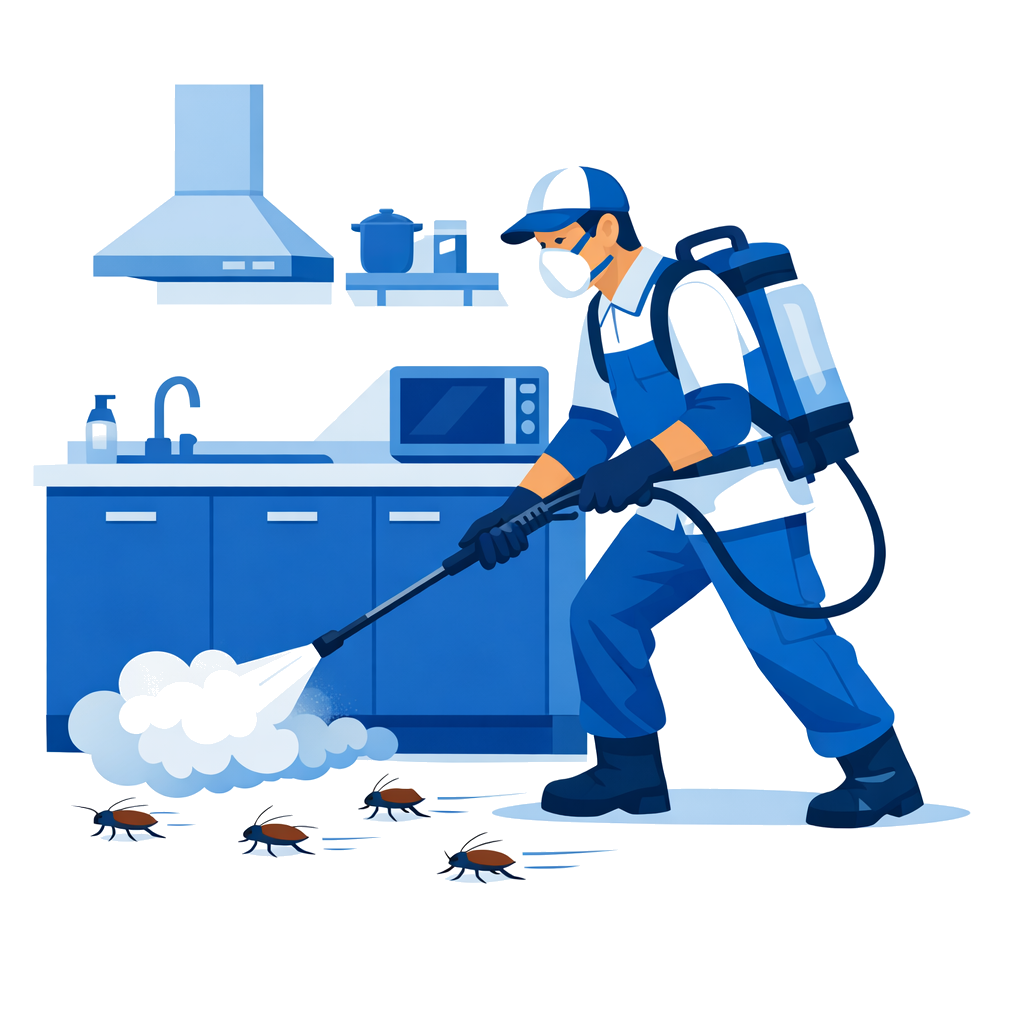
Faced with these sophisticated resistance mechanisms, insect control professionals have specific strategies. They use insecticide gels containing latest-generation molecules to which local populations have not yet developed resistance. They rotate active ingredients to avoid selecting for resistance. They apply products directly in the cockroaches' hiding places, thereby getting round avoidance behaviours. The domino effect of professional gel exploits the social behaviour of cockroaches to spread the active substance to the entire colony. At Mr Nuisibles, our technicians are trained in the latest advances in controlling resistant cockroaches. Contact us on 01 89 70 79 30 for treatment suited to the most stubborn cockroaches.