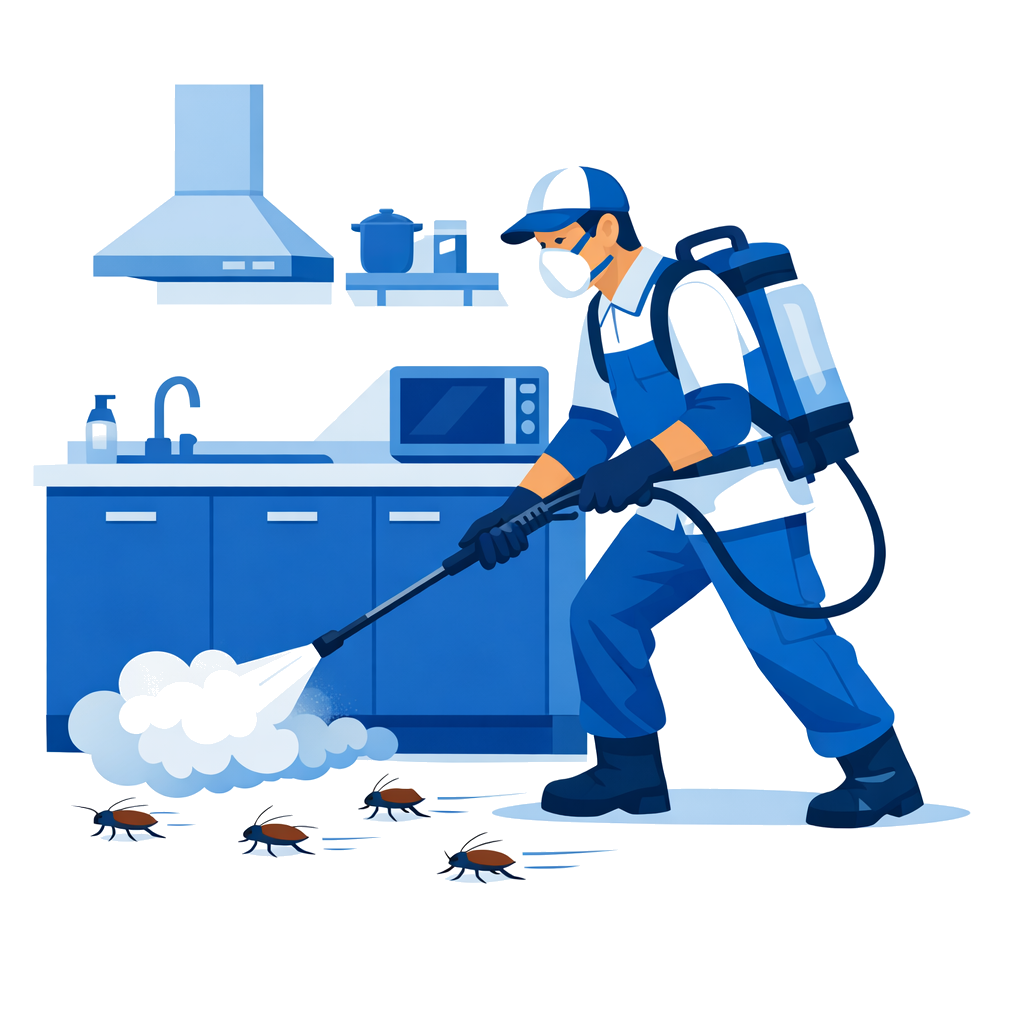
Ants are among the insects most frequently found in French homes, particularly in spring and summer. While a few isolated individuals are not a threat, an entire colony settling in your walls or under your floor can quickly become a real problem. Some species contaminate food, others damage wooden structures. Here is how to identify, treat and prevent an ant invasion effectively.
Metropolitan France is home to several species of ants likely to invade homes, and each one requires a different approach. The black garden ant (Lasius niger) is the most common. Measuring 3 to 5 millimetres, it enters houses in search of sugary food, forming clearly visible columns along skirting boards and door frames. The pharaoh ant (Monomorium pharaonis) is much smaller (about 2 millimetres) and yellowish-brown in colour. It is particularly fond of warm, humid environments and often nests inside walls, which makes it very difficult to eradicate. The carpenter ant (Camponotus), black and large (6 to 13 millimetres), digs galleries in damp wood to build its nest. Unlike termites, it does not eat the wood but breaks it up, creating characteristic piles of sawdust. Its presence may indicate a damp problem in your home and, in the long run, compromise the strength of wooden structures. Correctly identifying the species is fundamental because treatment strategies differ significantly from one species to another.
Several natural solutions can help repel ants or reduce their activity, but it is important to know their limits. White vinegar, sprayed on pheromone trails (the invisible paths that ants follow), temporarily disrupts their communication and disorganises their columns. However, the effect fades quickly and the ants establish new routes within a few hours. Diatomaceous earth, made up of fossilised micro-organisms with sharp edges, damages the ants' waxy cuticle and dries them out. Sprinkled at entry points, it provides an effective barrier as long as it stays dry. Bicarbonate of soda mixed with icing sugar makes a homemade bait: the ants are attracted by the sugar and ingest the bicarbonate, which disrupts their digestive system. Cinnamon, coffee grounds and cloves can have a short-lived repellent effect. All these methods can work for a few isolated ants, but they do not tackle the queen, who continues to lay eggs at the heart of the ant nest. Unless the queen is eliminated, the colony rebuilds itself indefinitely.
The most effective method for eradicating an ant colony for the long term is treatment with professional gel bait. This gel contains a delayed-action insecticide combined with a food attractant that ants find irresistible. The workers, attracted by the gel, carry it into the ant nest, where they share it with the other members of the colony, including the queen and the larvae, through a process called trophallaxis (mouth-to-mouth food exchange). The delayed effect is crucial: if the product killed the ants immediately, they would not have time to bring it back to the nest. Within a few days to two weeks, the insecticide spreads through the entire colony and causes its total collapse, including the elimination of the queen. This technique is particularly effective against difficult species such as the pharaoh ant, whose colonies are split into several interconnected nests. A professional technician knows exactly where to apply the gel to maximise its effectiveness: entry points, pheromone trails, close to identified nests.
Some instinctive reactions to an ant invasion are counterproductive and can make the problem worse. The first mistake is using insecticide sprays on ant columns. While it gives immediate satisfaction by killing the visible individuals, the spray represents only a tiny fraction of the colony and triggers a budding phenomenon in some species: the colony splits into several sub-colonies that scatter throughout your home, multiplying the sources of infestation. The second mistake is sealing entry points before treating the colony. The ants will simply find another way in, and you lose a strategic point for applying gel bait. Treat first, seal afterwards. The third mistake is using sugary baits on their own without insecticide: you attract more ants without eliminating any. Finally, never mix several insecticide products, as some neutralise each other and can pose risks to your health.
Once the colony has been eliminated, take precautions to prevent another invasion. Keep your kitchen spotlessly clean: wipe up spills of sugary liquids immediately, do not leave dirty dishes in the sink and empty the bin daily. Store sugar, honey, jams and biscuits in airtight containers. Regularly inspect potential entry points: cracks in exterior walls, window and door seals, pipe openings. Seal them with acrylic sealant or silicone. Prune tree branches and climbing plants that touch your façade, as ants use them as an access bridge. If your house has damp problems (leaks, condensation), deal with them as a priority, as damp attracts many species of ants, particularly carpenter ants. For any persistent or recurring invasion, contact Mr Nuisibles on 01 89 70 79 30. Our certified technicians identify the species present and apply the most suitable treatment for lasting elimination.