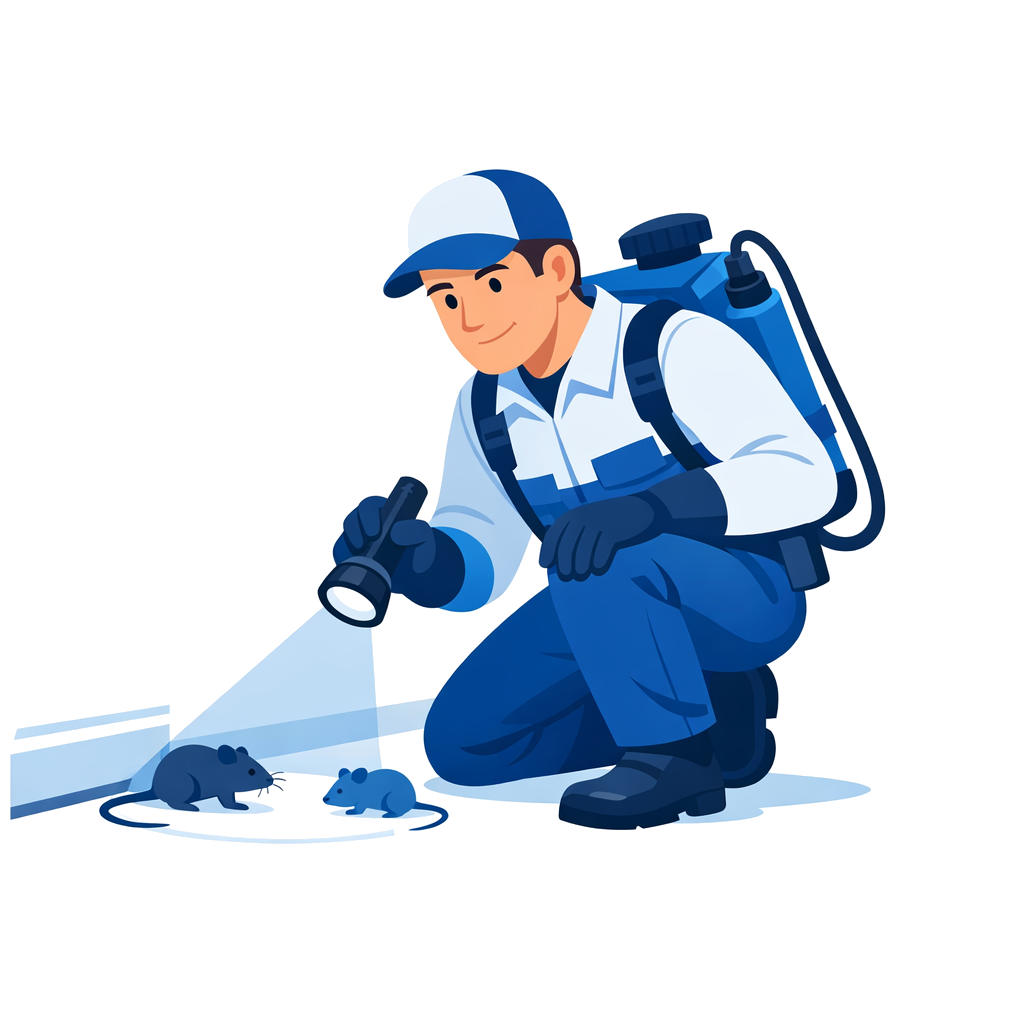
Discovering rodents in your home is an unpleasant experience that calls for a quick, methodical response. Whether you are dealing with house mice, brown rats or black rats, each species requires a specific approach. This complete guide helps you understand the different removal methods, assess what you can do yourself and identify the point at which calling in a professional becomes essential.
Before choosing a control method, it is essential to identify the species present correctly. The house mouse (Mus musculus) measures between 7 and 10 centimetres in body length, with a tail as long as its body. It is curious, readily explores new objects and adapts very quickly to its environment. The brown rat (Rattus norvegicus), also known as the Norway rat, is significantly larger (20 to 25 centimetres in body length) and prefers low levels: cellars, sewers, burrows. It is neophobic, meaning it is wary of new objects, which makes trapping more complex. The black rat (Rattus rattus) is smaller than the brown rat and an excellent climber. It is often found in lofts, attics and upper floors. Identifying the species means you can choose the right type of trap, the right bait and the right location.
For an isolated mouse problem, some methods that private individuals can use themselves can give good results. Classic snap traps remain effective when they are correctly positioned: place them perpendicular to the walls, with the trigger mechanism on the wall side, along the rodents' usual routes (along the skirting boards, behind furniture). Use peanut butter or chocolate as bait, as their strong smell attracts mice. Live-capture traps are an alternative if you wish to release the animal, but release it at least one kilometre from your home to prevent it from coming back. The ultrasonic devices sold in shops have very limited and temporary effectiveness: rodents quickly get used to them. Natural repellents based on peppermint or essential oils may have a slight deterrent effect but are never a solution on their own.
Treatment by a private individual quickly reaches its limits in several situations. If you see rodents in broad daylight, this indicates a large population that exceeds the capacity of individual traps. If signs of activity (droppings, gnaw marks) are found in several rooms, the infestation is already widespread. If you hear noises in the walls or ceilings, the rodents have colonised areas that cannot be reached without professional equipment. The use of rodenticides (poisons) by private individuals is strongly discouraged and regulated. These anticoagulant-based products pose serious risks to children, pets and wildlife. A poisoned rodent can die in an inaccessible place (wall, false ceiling) and cause putrid smells for several weeks. Only a Certibiocide-certified technician is authorised to use these products under optimal safety conditions, with secured bait stations and rigorous follow-up.
When you call in a professional such as Mr Nuisibles, the treatment begins with a thorough assessment. The technician inspects your entire home to determine the species present, assess the extent of the infestation and identify the entry points and areas of activity. He then draws up a personalised treatment plan that combines several complementary methods. The first step is always proofing, that is, sealing the entry points identified to stop new rodents from getting into the home. Then, depending on the situation, the technician sets up a system combining professional mechanical traps and, if necessary, secured bait stations containing latest-generation rodenticides. A schedule of follow-up visits is drawn up to check the effectiveness of the treatment, renew the devices and adjust the strategy if necessary. The complete treatment generally lasts between two and four weeks, depending on the extent of the infestation.
Whether you attempt a treatment yourself or call in a professional, certain health precautions are essential. Rodent droppings and urine can contain dangerous pathogens (leptospirosis, hantavirus, salmonella). Never sweep up droppings dry, as this sends particles into the air. First dampen them with a disinfectant, then pick them up with paper towels while wearing disposable gloves. Wash your hands thoroughly after any handling. If you find a dead rodent, do not touch it with your bare hands. Wear gloves, place it in an airtight double plastic bag and put it in the outdoor bin. Then disinfect the area where it was lying. If you discover an infestation in your home, don't hesitate to contact Mr Nuisibles on 01 89 70 79 30 for a free assessment and a professional solution tailored to your situation.