When you spot a cockroach in your kitchen, the immediate reaction is disgust. But beyond how they look, cockroaches represent a genuine health hazard for your household. These insects, which live in pipes, bins and unsanitary areas, carry dozens of pathogenic bacteria on their bodies, which they deposit on your worktops, your utensils and your food. Here is what you need to know about these invisible dangers.
Cockroaches are recognised carriers of numerous pathogens. Their hairy bodies and sticky legs pick up bacteria in sewers and dirty areas and then deposit them on the surfaces of your kitchen. Among the bacteria most commonly carried are salmonella, responsible for severe gastroenteritis, Escherichia coli (E. coli), which causes intestinal infections that are sometimes serious, and Staphylococcus aureus, a cause of food poisoning. Cockroaches can also carry parasites such as intestinal worms, as well as pathogenic fungi. Every night, while you sleep, these insects roam your kitchen and silently contaminate everything they touch.
What many people do not know is that cockroaches are also a major cause of respiratory allergies. Their droppings, their moults (dead skins), their saliva and fragments of their bodies break down into microscopic particles that disperse into the surrounding air. These allergens are particularly concentrated in the kitchen and in damp rooms. Medical studies have shown that exposure to cockroach allergens is a significant trigger of asthma attacks, particularly in children living in urban areas. In heavily infested homes, the level of cockroach allergens suspended in the air can be considerable.
Cockroaches are omnivorous, nocturnal insects. At night, they come out of their hiding places to feed and methodically explore your kitchen. They nibble at food left uncovered, but also at cardboard and thin plastic packaging. They leave behind droppings, secretions and traces of regurgitation on everything they touch. An open packet of cereal, a fruit bowl on the worktop, bread in an unsealed bag: anything can be contaminated. The symptoms of food poisoning linked to cockroaches (nausea, diarrhoea, fever) are often attributed to other causes, which makes the problem particularly insidious.
The kitchen brings together the three things cockroaches need to survive and reproduce: food, water and warmth. The space under the sink, with its pipes and moisture, is a perfect refuge. Household appliances (fridge, dishwasher, oven) give off heat and offer inaccessible nooks. Crumbs and food residues provide the food. The German cockroach, the most common species in French homes, is particularly well adapted to this environment. It can survive a month without food but only lasts a few days without water, hence its preference for the damp areas of the kitchen and bathroom.
Several hygiene measures help limit the risks. Always store your food in airtight glass or hard plastic containers. Never leave dirty dishes in the sink overnight. Clean grease and food residues from behind and under household appliances. Repair water leaks under the sink and in the bathroom immediately. Empty your bins daily and use bins with lids. Fill the gaps around pipes with silicone sealant. These habits make your kitchen less attractive to cockroaches.
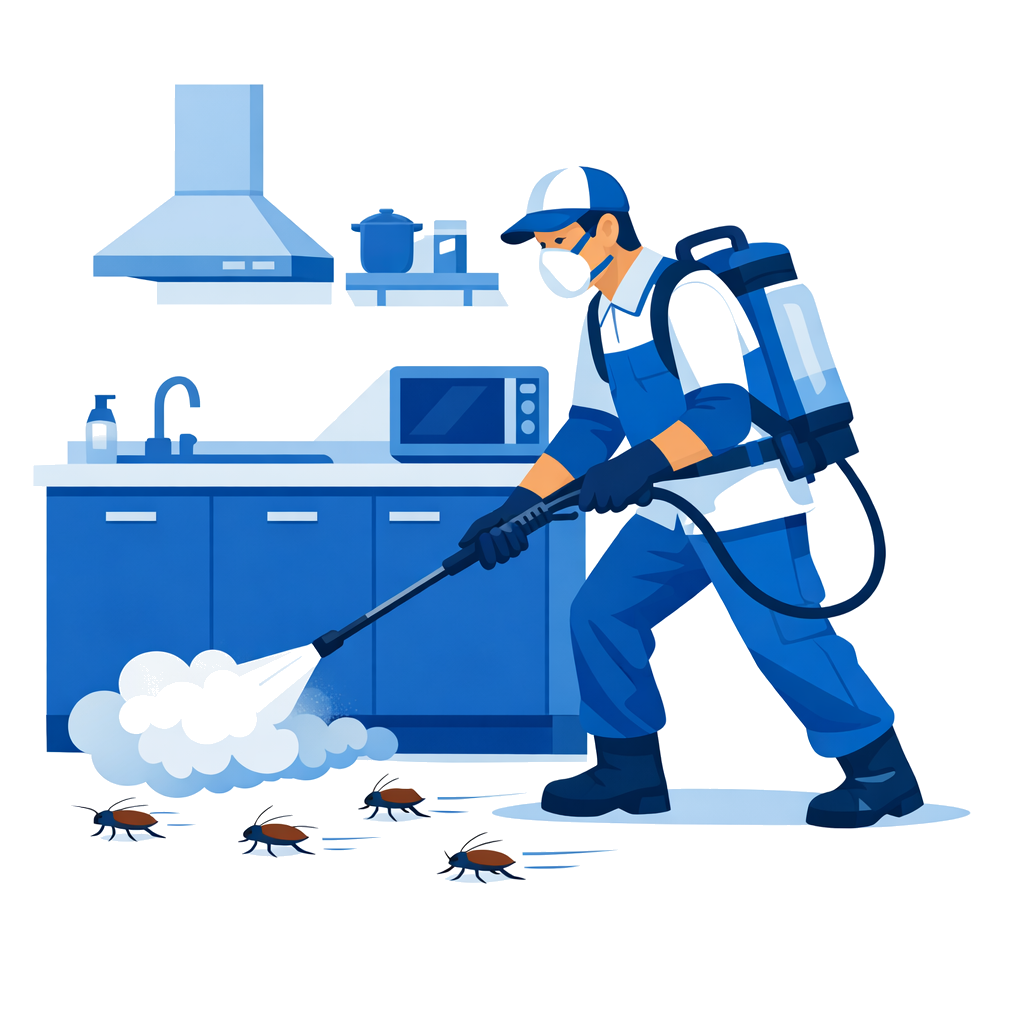
If you spot a cockroach in broad daylight, it is a sign that the colony is probably large: individuals are being ‘pushed’ out of their hiding places by overcrowding. At this stage, shop-bought products are ineffective because they do not reach the nest. Only a professional treatment with domino-effect insecticide gel can eliminate the entire colony. At Mr Nuisibles, our certified technicians carry out a full assessment of your home and apply a targeted treatment in the strategic areas. Request a free, no-obligation quote by calling us on 01 89 70 79 30. Your health and that of your family deserve effective protection.